EMT Practice Test

1. Question Content...


Question List
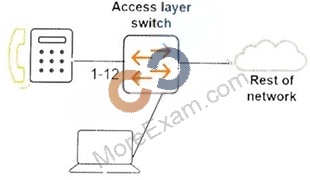
Question1: A company starts to have issues with too many rules in the dynamic ACLs applied to AOS-Switch ports.
Administrators decide to remove some of the common rules from the dynamic ACLs and enforce them in an ACL applied to the users' VLAN instead.
What is one rule that administrators should keep in mind to ensure that the new ACLs control traffic as they expect?

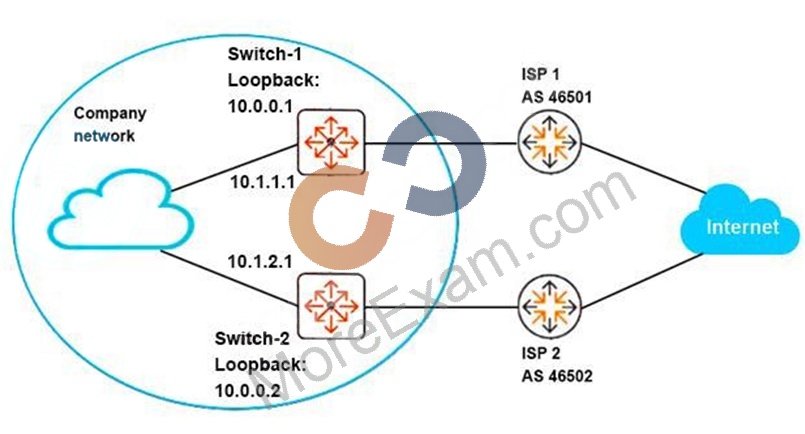
Question2: Refer to the exhibits.
Exhibit 1

Exhibit 2

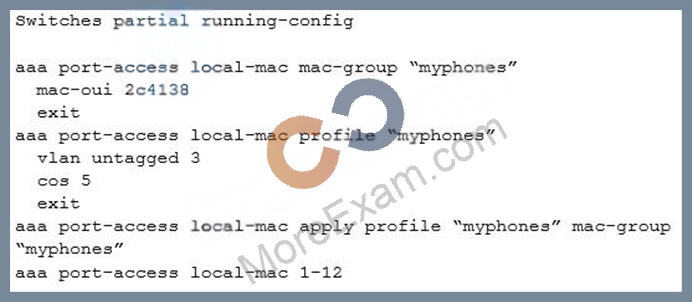
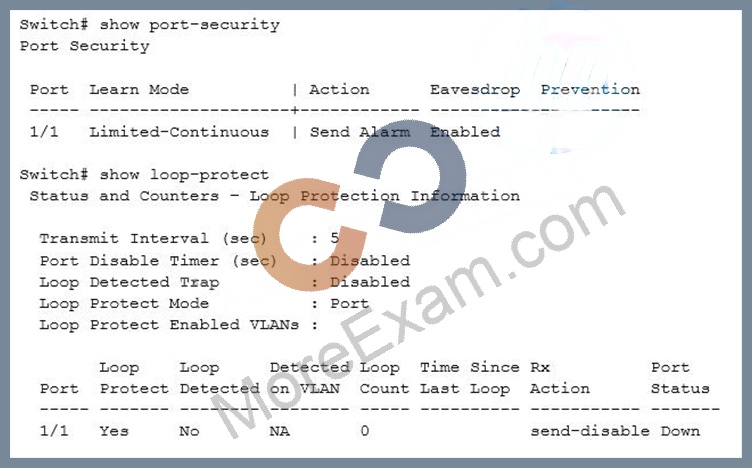
A company does not require authentication for security, but AOS-Switches are set up to use local MAC authentication (LMA) to assign the correct VLAN and priority to IP phones. IP phones and computers belong to different VLANs. Each device is supposed to connect to a specific port, but sometimes users connect their devices to the wrong ports and cannot receive access without help from IT.
How can a network administrator configure the switches to eliminate this issue?

Question3: An AOS-Switch needs to use captive portal to integrate with an Aruba ClearPass Guest solution. The solution should allow guests to connect their own devices to the network, be redirected to a portal, log in, and be granted access transparently.
What is one setting administrators should configure for this solution?

Question4: What is one difference between BPDU protection and root guard?
Question5: The implementation plan for AOS-Switches calls for them to implement port-based tunneled node. The Aruba Mobility Controllers that will support the AOS-Switches run software 8.1. The controllers will also support APs, are managed by Mobility Master, and use clustering.
Which issue with this plan needs to be addressed?

Question6: Refer to the exhibit.

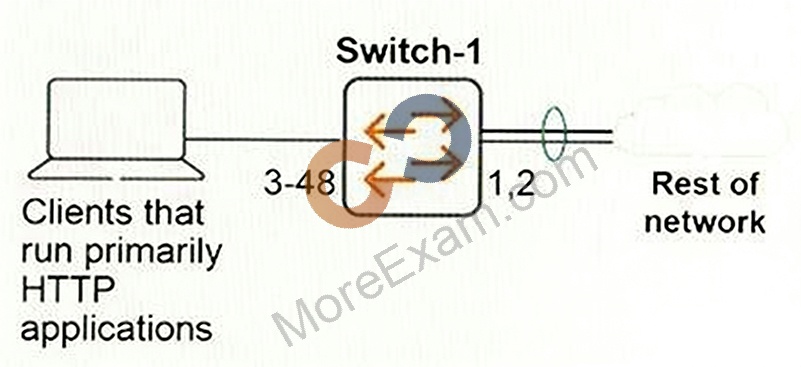
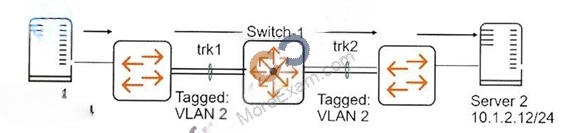
Switch-1 is an AOS-switch that is operating at factory default settings for QoS and has type of service disabled. It receives a frame with 802.1p value 5 on trk1, on VLAN 2. How does the switch treat the frame when it forwards it on TRK2?

Question7: A company wants to implement 802.1X authentication to authenticate client devices on AOS-Switch ports.
The company has a RADIUS server that uses PEAP MSCHAP-v2 for the authentication method. What is one task administrators should complete before they implement the plan?

Question8: Refer to the exhibit.

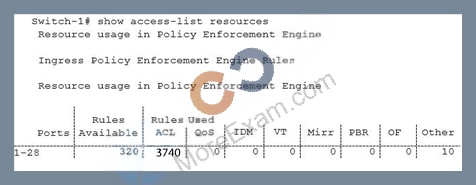
An AOS-Switch has an extended ACL that is applied to several physical interfaces.
- New interfaces have been brought online.
- The ACL has been applied to them as well.
A network administrator sees the output in the exhibit and is concerned that the switch will reach the limit for rules.
What can the administrator do to address this concern?

Question9: A network uses MSTP and has AOS-Switches at the access layer. The company wants edge ports on the access layer switches to meet these criteria:
They prevent all rogue switches that run STP, RSTP, or MSTP from connecting to the network.

If a rogue switch connects and is then replaced by a proper endpoint, the port recovers automatically

without IT staff involvement.
How should the network administrator set up the edge ports to meet these requirements?

Question10: Refer to the exhibits.
Exhibit 1

Exhibit 2

Exhibit 1 shows the topology for the network. The network administrator sees the log entries shown in Exhibit 2. Which type of failure is indicated?

Question11: AOS-Switches authenticate guests to ClearPass with captive portal. An administrator notices that some guests are unable to reach the captive portal page. What will resolve this issue?

Question12: Which switches can be deployed in a mesh topology for backplane stacking?
Question13: A network administrator needs to configure an AOS-Switch to classify traffic. Comparing QoS policy and global policy, what is one function that only a class-based QoS policy can fulfill?

Question14: Network administrators decide to change OSPF Area 1 to a stub area in order to solve some performance issues. No routes are redistributed into area 1.
What is one implication of making this change?

Question15: A network administrator plans to apply DSCP 46 to all traffic on a port. What is required for this configuration to work?

Question16: Refer to the exhibit.

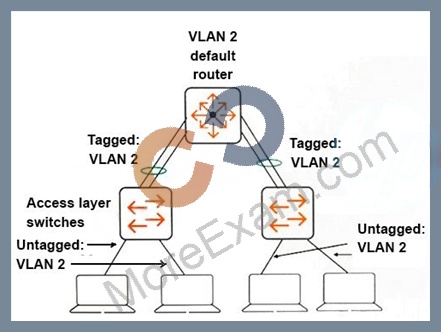
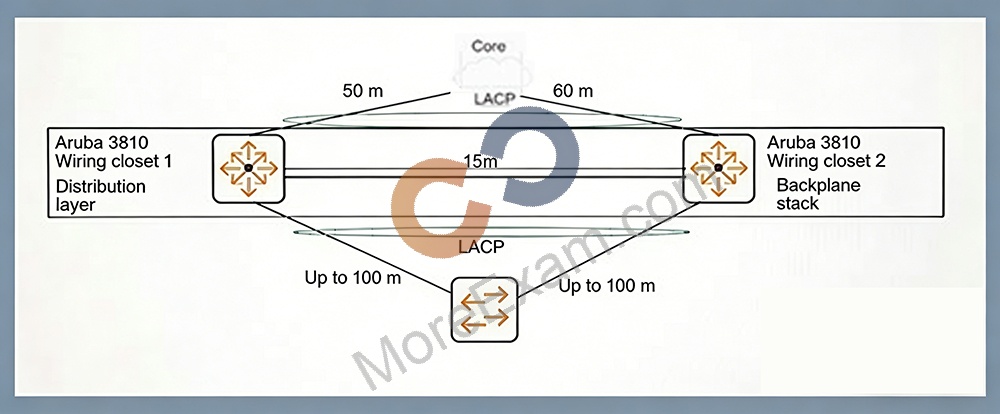
A company requires distribution layer switches that can provide Layer 2 and Layer 3 redundancy. The exhibit shows the proposal for these switches. Which change to the proposal will help meet the company's requirements?

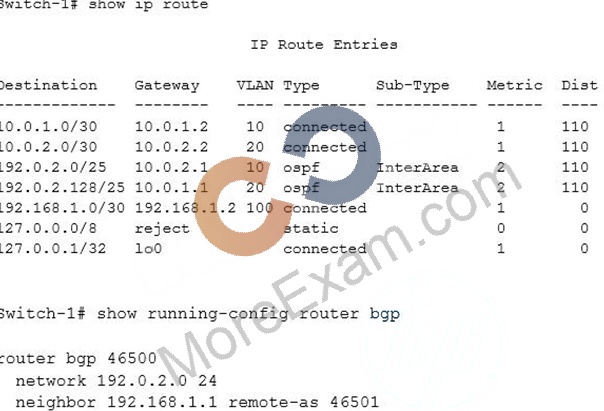
Question17: Refer to the exhibit.

What must the network administrator do on Switch-1 to enable this switch to advertise 192.0.2.0/24 to the router at 192.168.1.1?

Question18: A network administrator wants to use an ACL, acl1, to control traffic from devices in VLAN 12 as the traffic is routed out of VLAN 12. The ACL should not control traffic within the VLAN.
Which keyword should the administrator enter at the administrator enter at the end of this command:
Switch(config)# vlan 12 ip access-group acl1____

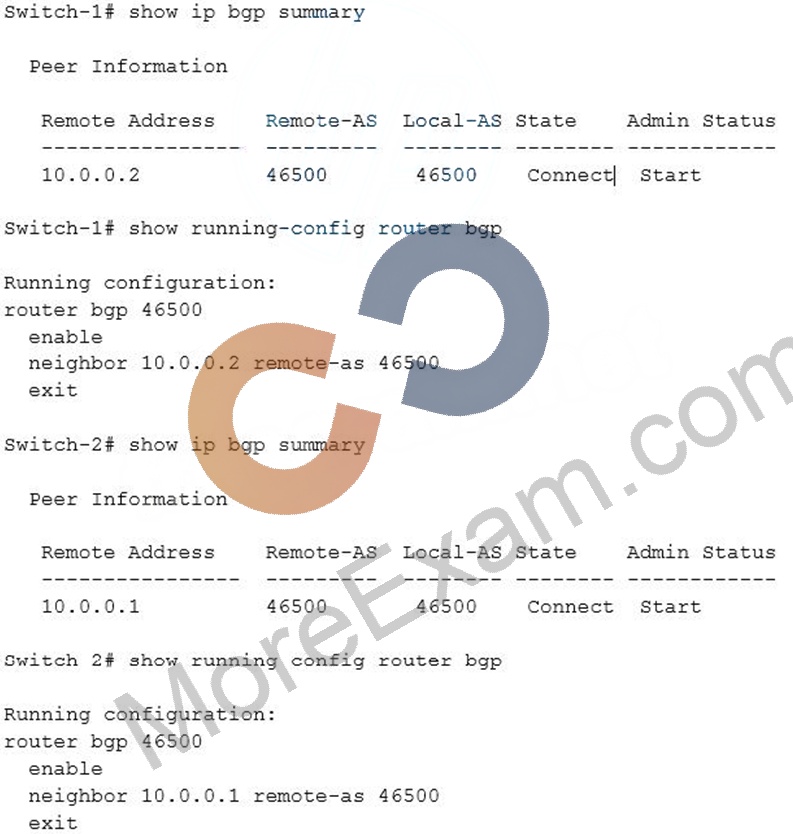
Question19: Refer to the exhibits.
Exhibit 1

Exhibit 2

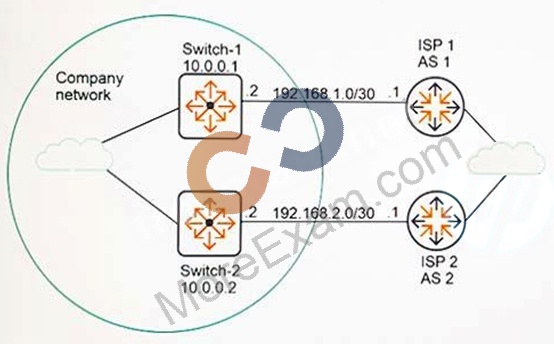
The network administrator needs to set up BGP between the two company switches, Switch-1 and Switch-
2. The BGP connection does not establish. Based on the exhibits, what does the administrator need to do to fix the issue?

Question20: Network administrators need to track when traffic matches deny entry in an ACL applied to a port. They want the alert to be sent to a syslog server that is already set up to send logs.
What should administrators do to enable alerts?

Question21: An AOS-Switch enforces 802.1X. It receives an Access-Accept with this HPE VSA from its Radius server:
Attribute Name and ID = HPE-User-Role (25) Value = contractor
The switch then rejects the client. What is one requirement for the switch to accept the message and authorize the client?

Question22: Refer to the exhibit.

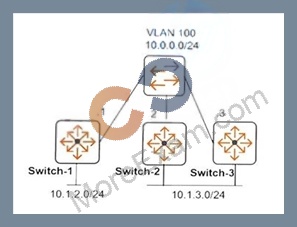
The network administrator wants to reduce failover time if a switch link in VLAN 100 goes down. What should the administrator do?

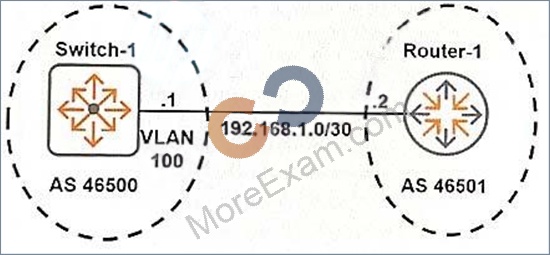
Question23: Refer to the exhibit.

Switch-1 runs BGP. What should the network administrator do to permit Switch-1 to establish a neighbor relationship with Router-1?

Question24: Refer to the exhibit.

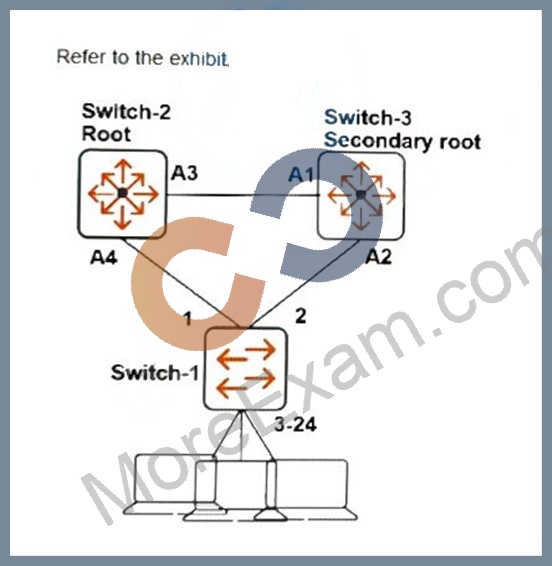
A network administrator wants to add the protections of root guard to the network. Based on the spanning tree topology, on which ports should the network administrator implement root guard?

Question25: Two AOS-Switches connect on VLAN 10 in OSPF Area 1, which is defined as a stub area on both. Which mismatch can cause OSPF routers to lose adjacency?

Question26: Refer to the exhibits.

Exhibit 2

The network administrator configures the commands shown in Exhibit 2. Which mismatch will cause an issue?

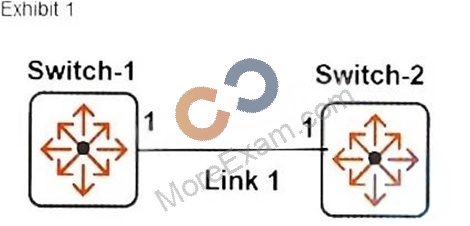
Question27: What is a reason to implement PIM-DM as opposed to PIM-SM?

Question28: A network administrator can set the OSPF metric type on an AOS-Switch to Type 1 or Type 2. What is the difference?

Question29: Network administrators need to configure a BGP neighbor on an AOS-Switch. What defines the neighbor as an iBGP neighbor?

Question30: Refer to the exhibits.
Exhibit 1

Exhibit 2

The IP phone in the exhibit is set up to complete 802.1x authentication to the network. How can the netwotk administrator prevent a user on the computer from receiving network access without authentication?

Question31: Refer to the exhibits.
Exhibit 1.

Exhibit 2.

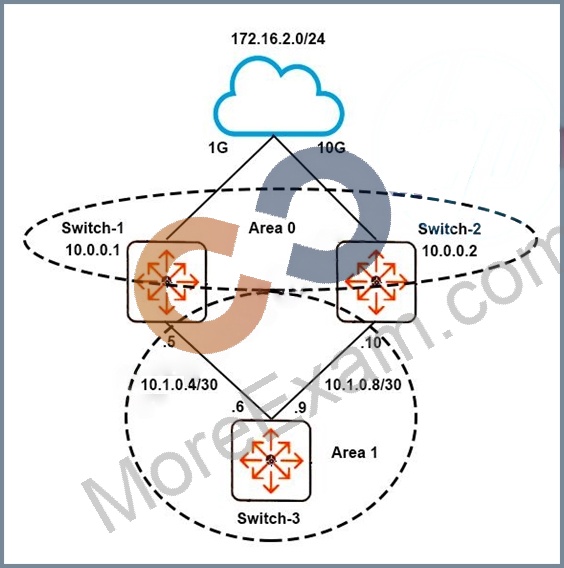
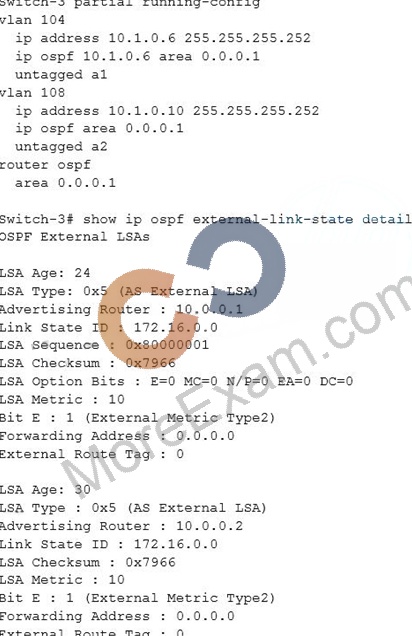
The exhibits show the current operational state for routes on Switch-3 to send all traffic to 172.16.0.0/16 through Switch-2 during normal operation.
Which single configuration change creates the desired behavior?

Question32: Refer to the exhibit.

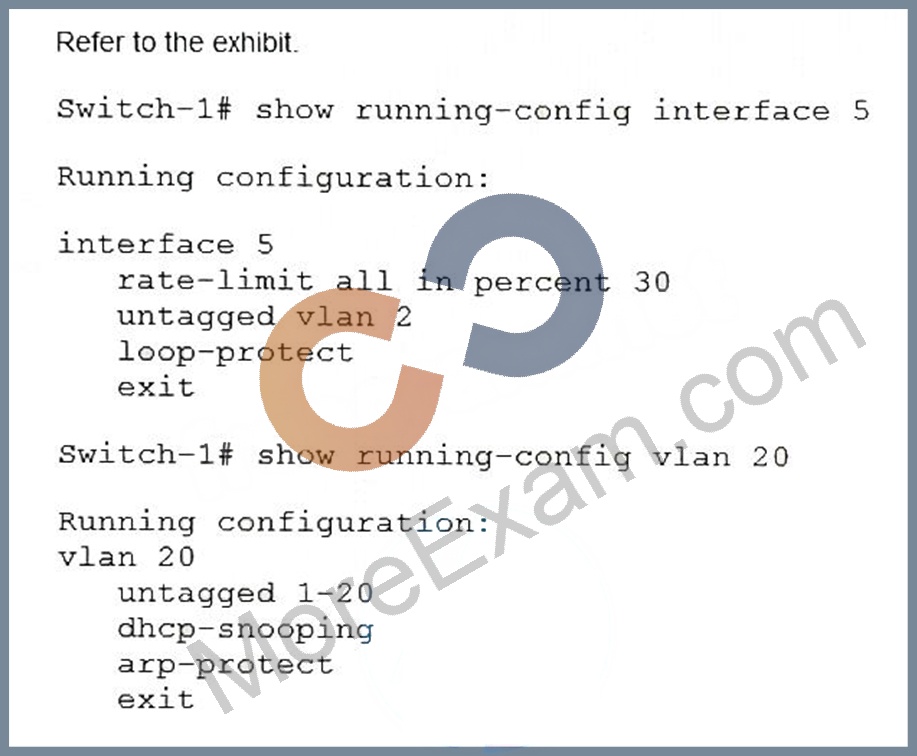
The exhibit shows configurations for interface 5 and VLAN 20. Note that DHCP snooping and ARP protection are also enabled.
A network administrator finds that interface 5 on an AOS-Switch is disabled. The administrator re-enables the interface, but it shuts down again. What should the administrator investigate?

Question33: What is a reason to create a virtual link between two OSPF routers?
Question34: A network administrator configures DHCP snooping on VLAN 2. How does the switch handle DHCP traffic that arrives in this VLAN on an untrusted interface?

Question35: Refer to the exhibits.


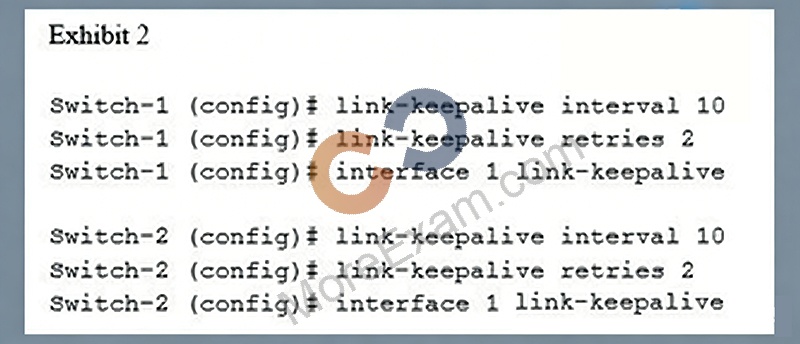
The network administrator enters the commands shown in Exhibit 2, and Switch-1 and Switch-2 exchange keepalive messages. What is the expected behavior if Switch-1 later fails to receive keepalive messages from Switch-2?

Question36: Refer to the exhibit.

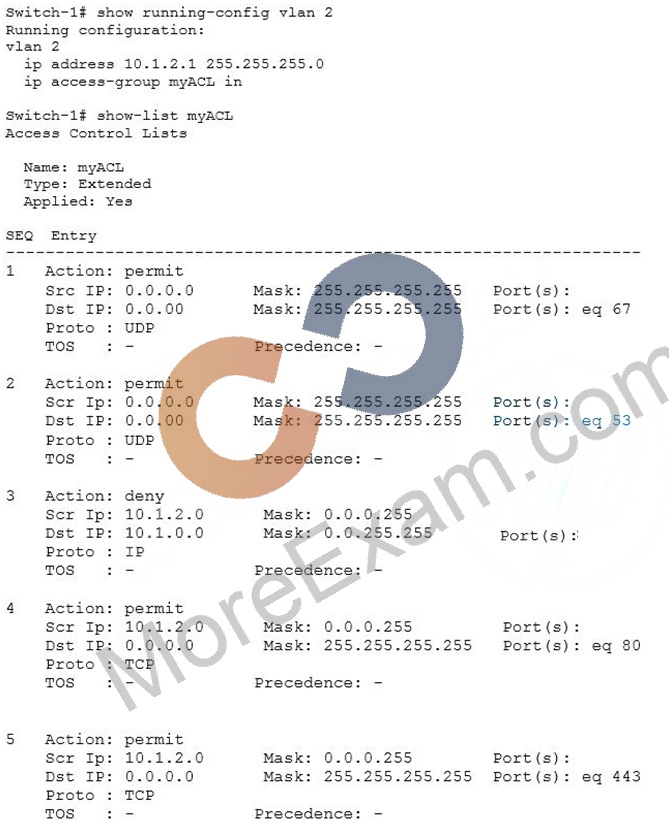
A network administrator needs to alter myACL so that it permits all traffic that arrives in VLAN 2 and is destined to 10.1.10.0/24. Besides this change, the ACL must continue to act as it does now. The administrator plans this new rule:
permit ip any 10.1.10.0/24

Question37: Refer to the exhibits.
Exhibit 1

Exhibit 2

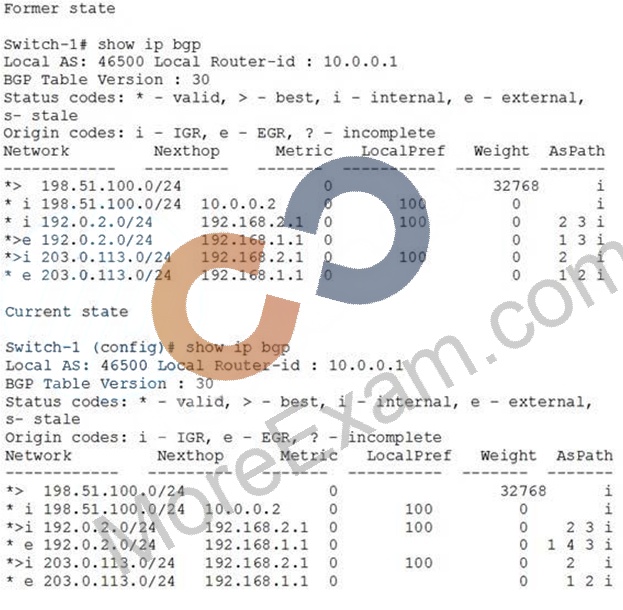
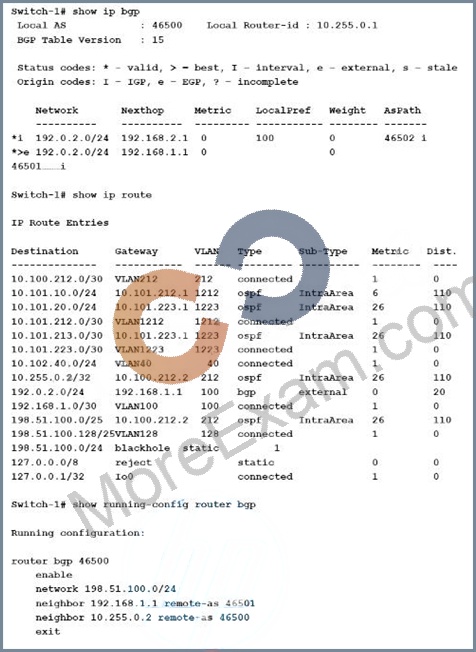
Exhibit 1 shows a portion of the BGP routing table when the BGP solution was first deployed. Exhibit 2 shows the same portion at the current time. What can explain the current state?

Question38: Refer to the exhibit.

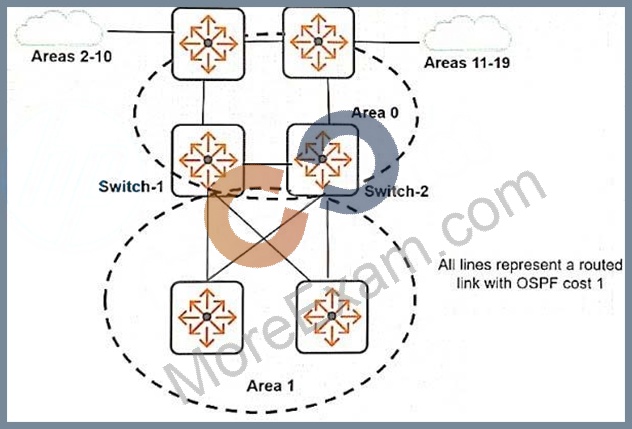
A company wants to change Area 1 shown in the exhibit from a stub area to a totally stub area.
What will be one effect of this planned change?

Question39: A company has AOS-switches, Aruba ClearPass, and Aruba AirWave. A network administrator needs to find the source of a performance issue that often occurs at the start of the day and early in the afternoon.
Which action is likely to give the administrator the most useful information for the investigation?

Question40: Refer to the exhibit.

Switch-1 is routing traffic to 192.0.2.0/24 over a less-than-optimal path. Which issue could prevent Switch-
1 from selecting the first route listed in the table as a best BGP route?

Question41: Refer to the exhibits.
Exhibit 1

Exhibit 2

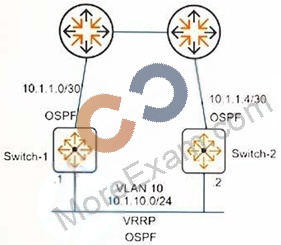
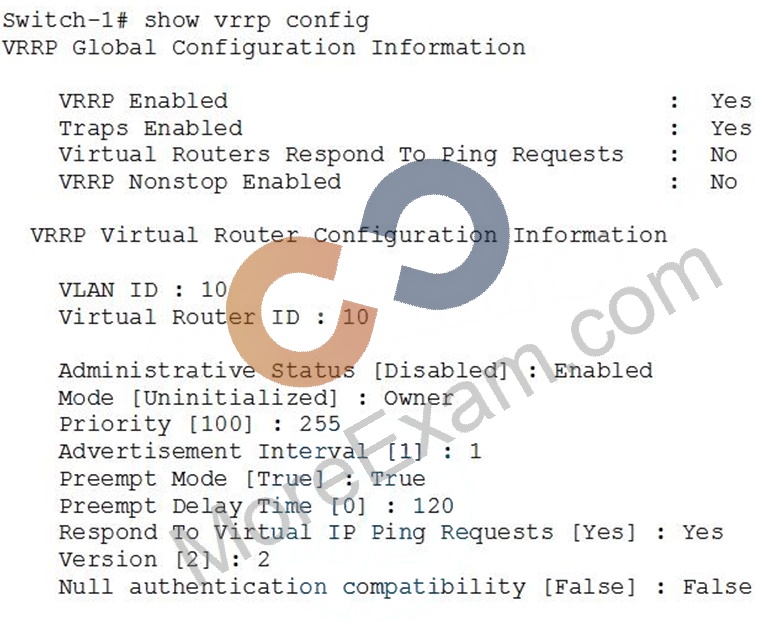
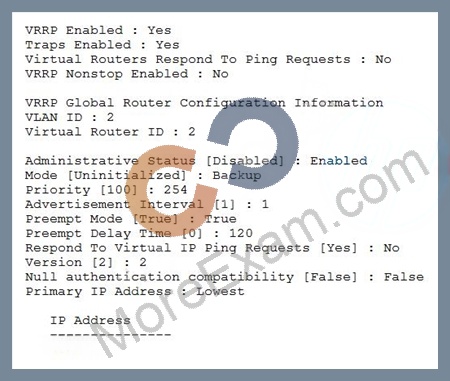
Switch-1 has a power issue that causes it to fail. When Switch-1 comes back up, endpoints lose connectivity for a few minutes. The network administrator decides to enter this command on Switch-1:
Switch-1 (config)# vlan 10 vrrp vrid 10 preempt-delay-time 120
Exhibit 2 shows the VRRP configuration just after the change. What is the effect of this change?

Question42: Refer to the exhibits.
Exhibit 1

Exhibit 2

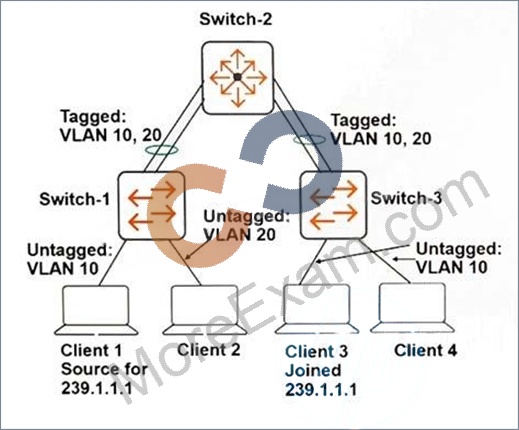
Exhibit 2 shows IGMP groups on Switch-2, which runs IGMP but not PIM. Switch-1 and Switch-3 do not have IGMP or PIM enabled. Client 1 begins to forward multicasts to 239.1.1.1.
Which clients receive the multicasts?

Question43: The security policy for a company requires that switches use SNMPv3 and accept all read-only SNMPv2c messages. The network administrator enables SNMPv3. Which additional action should the network administrator take to comply with this policy?

Question44: Refer to the exhibit.
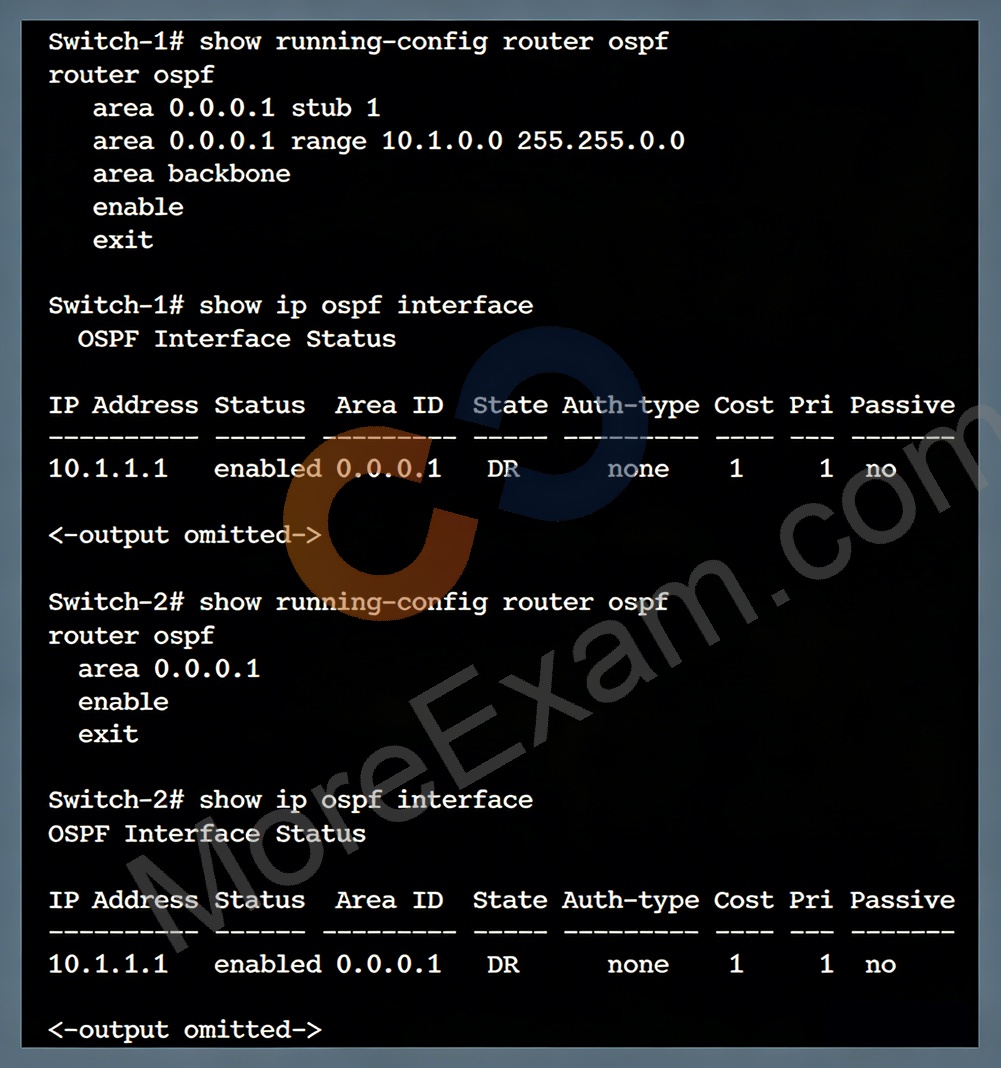
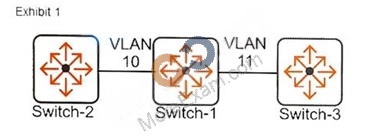
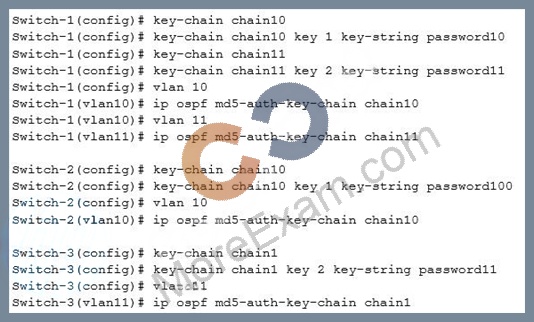
Why are these switches unable to achieve adjacency?
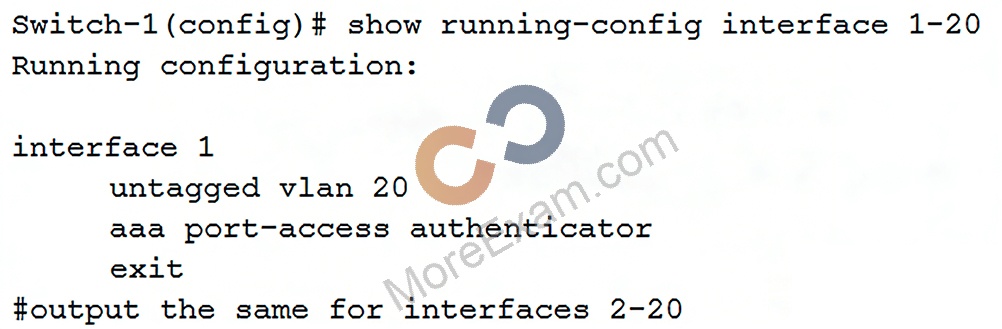
Question45: A company has AOS-Switches deployed at sites with inexperienced IT staff. The main office network administrators want to track if configurations change on branch switches.
What should be set up for this purpose?

Question46: Refer to the exhibit.

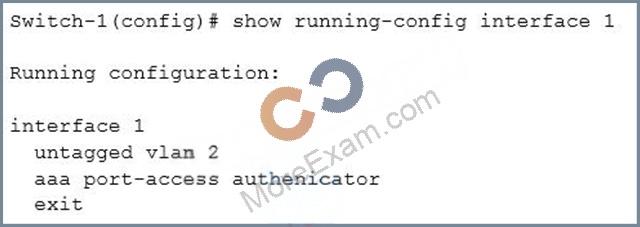
Several interfaces on an AOS-Switch enforce 802.1X to a Radius server at 10.254.202.202. The interface
802.1X settings are shown in the exhibit, and 802.1X is also enabled globally. The security team have added a requirement for port security on the interfaces as well. Before administrators enable port security, which additional step must they complete to prevent issues?

Question47: Refer to the exhibit.

Every switch in the exhibit will route traffic. The company requires a topology in which failover for switch-to- switch links is exclusively handled by the routing protocol and occurs as quickly as possible. Which topology should the administrator use?

Question48: Refer to the exhibit.

An AOS-Switch connects to an unmanaged switch in a meeting room. The exhibit shows security settings for this port. Users report that they sometimes lose connectivity and then get it back.
Which best practice should network administrators follow to avoid issue?

Question49: A network administrator sets up MAC-Auth and captive portal to Aruba ClearPass on AOS-Switches. The solution seems to work for most guests. However, some guests open their browsers and are not redirected to the captive portal.
How should the administrator address the likely cause of the issue?

Question50: Refer to the exhibits.
Exhibit 1

Exhibit 2

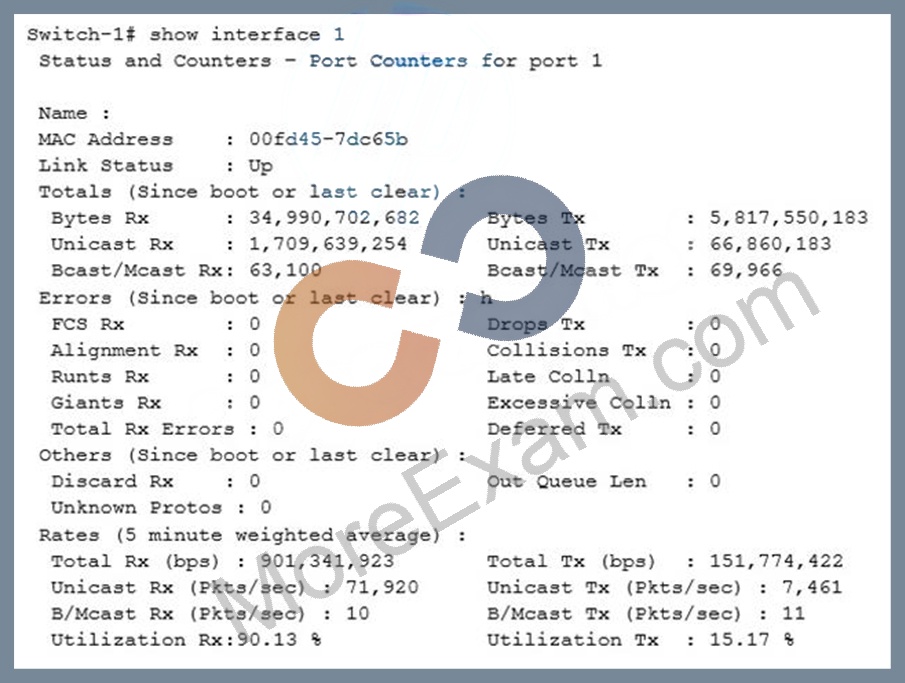
Network administrators are alerted to high interface utilization on a switch by a management solution. They examine the utilization on the uplink interfaces several times an hour during problem times. The exhibit shows output typical of times of congestion. The administrators want to allocate bandwidth fairly and reduce congestion on the uplinks.
What could help meet these requirements?

Question51: Refer to the exhibit.

The access layer AOS-Switches currently run DHCP snooping on VLAN 2 and connection rate filtering on edge ports. They are at default settings for ARP protection. A network administrator then enters these commands on each of the access layer switches:
Switch(config)# arp-protect vlan 2 Switch(config)# arp-protect
Which behavior accurse?

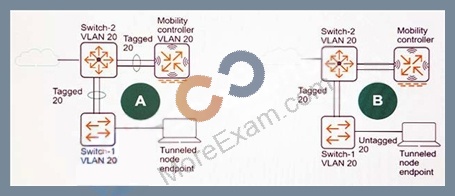
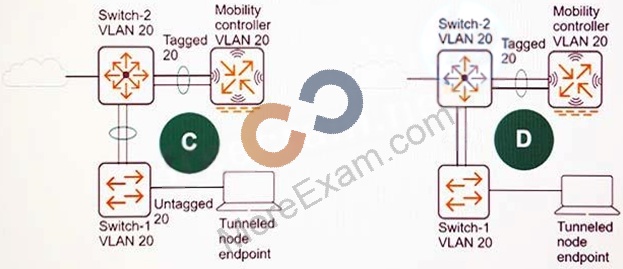
Question52: Refer to the exhibits.
Exhibit 1

Exhibit 2

In the exhibits, VLAN 20 under a device name indicates that the device is configured with that VLAN. The exhibits also indicate whether VLAN 20 is statically configured on each link, either as an untagged or a tagged VLAN. If the link has no label, VLAN 20 is not statically configured on that link.
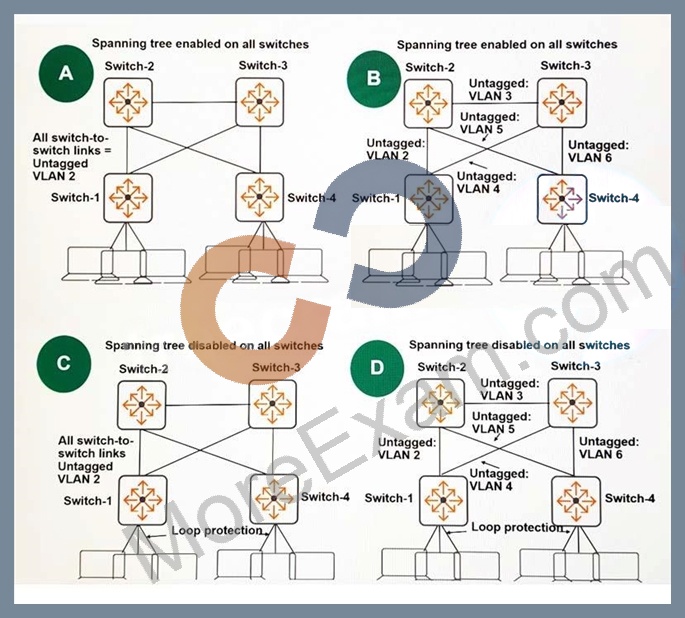
A network administrator needs to deploy AOS-Switches that use port-based tunneled node. The plan calls for tunneled-node endpoints to be assigned to VLAN 20 and for the Aruba Mobility Controller to handle the tunneled-node traffic at Layer 2. Which exhibit shows the correct plan for VLAN 20 in the wired infrastructure?

Question53: A company has a wireless Aruba solution and wired users that connect to AOS-Switches. The company wants deep insight into the types of applications that wired users run. The company also wants more control over the traffic.
What can the company do to meet these goals?

Question54: Refer to the exhibit.

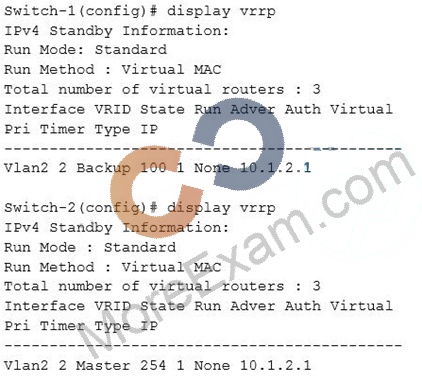
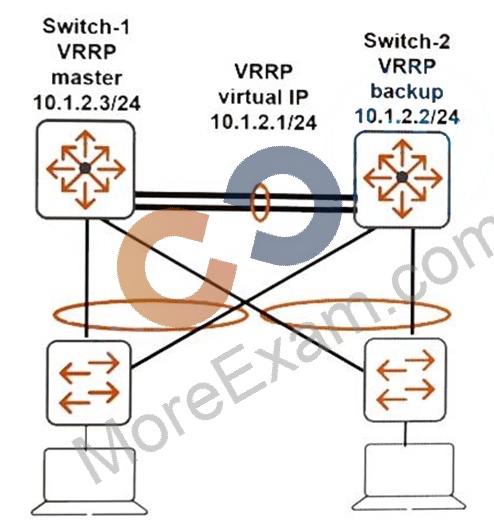
Switch-1 and Switch-2 are configured to provide VRRP in VLAN 2. Based on the output, what will happen when a client in VLAN 2 sends an ARP request for its default gateway IP address?

Question55: An AOS-Switch needs to be configured to support tunneled node in role-based mode. The Mobility Controller administrators tell the switch administrators that the AOS-Switch will integrate with a cluster of Mobility Controllers. The cluster virtual IP address is 10.1.1.10.
How should switch administrator integrate the AOS-Switch with the cluster?

Question56: Refer to the exhibit.

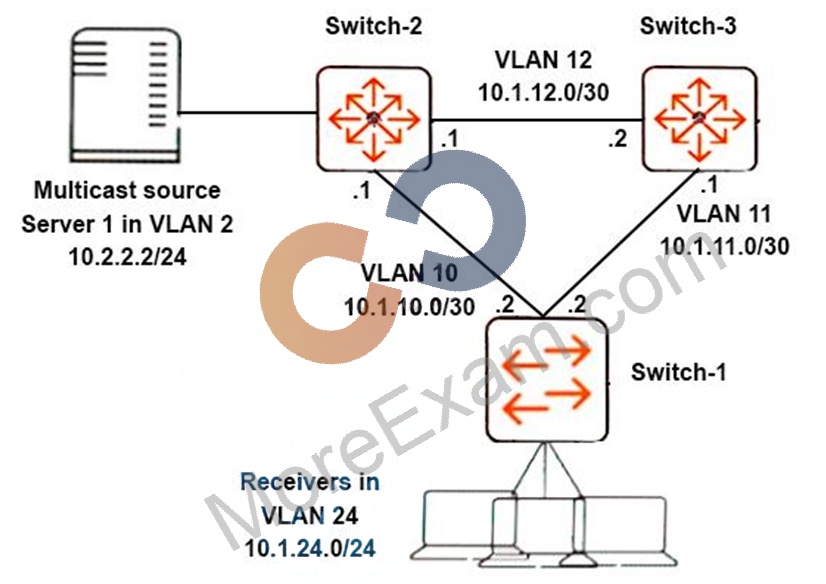
Network administrators set up PIM-DM to route multicast traffic from Server 1 to clients in VLAN 24. The multicasts are not active now, but the administrators want to determine which path the multicasts will take.
What should the administrators check to help them calculate this path?

Question57: A network administrator needs to create a backplane stack with four AOS-Switches. The administrator wants to choose which switch becomes the commander. Which procedure meets those needs?

Question58: A customer wants to authenticate AOS-Switch managers to a RADIUS server. The CIO wants to assign different rights to different management users for granular control over their rights and privileges. What must the network administrator enable on the AOS-Switches to ensure they comply with this plan?

Question59: A company has AOS-Switches, Aruba ClearPass, and Aruba AirWave. A network administrator needs to set up a new switch with the same settings found on other switches in the company.
Which action is likely to be the most useful to perform the task?

Question60: An AOS-Switch is configured to use captive portal and RADIUS to integrate with an Aruba ClearPass solution. What should the administrator do to enable the switch to accept change of authorization (CoA) messages from ClearPass?

Question61: An AOS-Switch runs IGMP on A VLAN.
What is a requirement for the switch to be a potential IGMP querier on that VLAN?

Question62: A company deploys AOS-Switches at sites with inexperienced IT staff. The main office network administrators want to monitor thresholds to generate alerts on branch switches. What should be set up for this purpose?

Question63: A network administrator applies port security to a port with the send-alarm action. What does the switch do if it detects traffic from an unauthorized MAC address on the port?

Question64: The security plan for AOS-Switches requires protection from incoming malware traffic: generated from a worm-or virus-infected host.
Which feature should be implemented to provide the required protection?

Question65: Which technologies can prevent split brain in a VSF fabric that includes Aruba 2930F switches?

Question66: Refer to the exhibits.
Exhibit 1

Exhibit 2

Switch-1 and Switch-2 are configured to provide VRRP in VLAN 2. The default gateway for VLAN 2 is set to the VRRP virtual IP. Client-1 in VLAN 2 cannot ping its default gateway.
Based on the exhibits, what can administrators determine?

Question67: A network administrator needs to create a QoS policy on an AOS-Switch. What is one component that the administrator must create before the policy?

Question68: Refer to the exhibit.

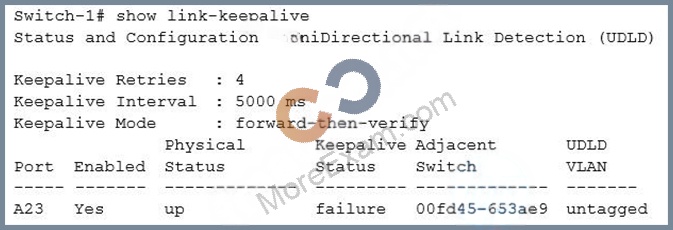
Switch-1 and Switch-2 connect on interface A23. The switches experience a connectivity issue. The network administrator sees that both switches show this interface as up. The administrator sees the output shown in the exhibit on Switch-1.
What is a typical issue that could cause this output?